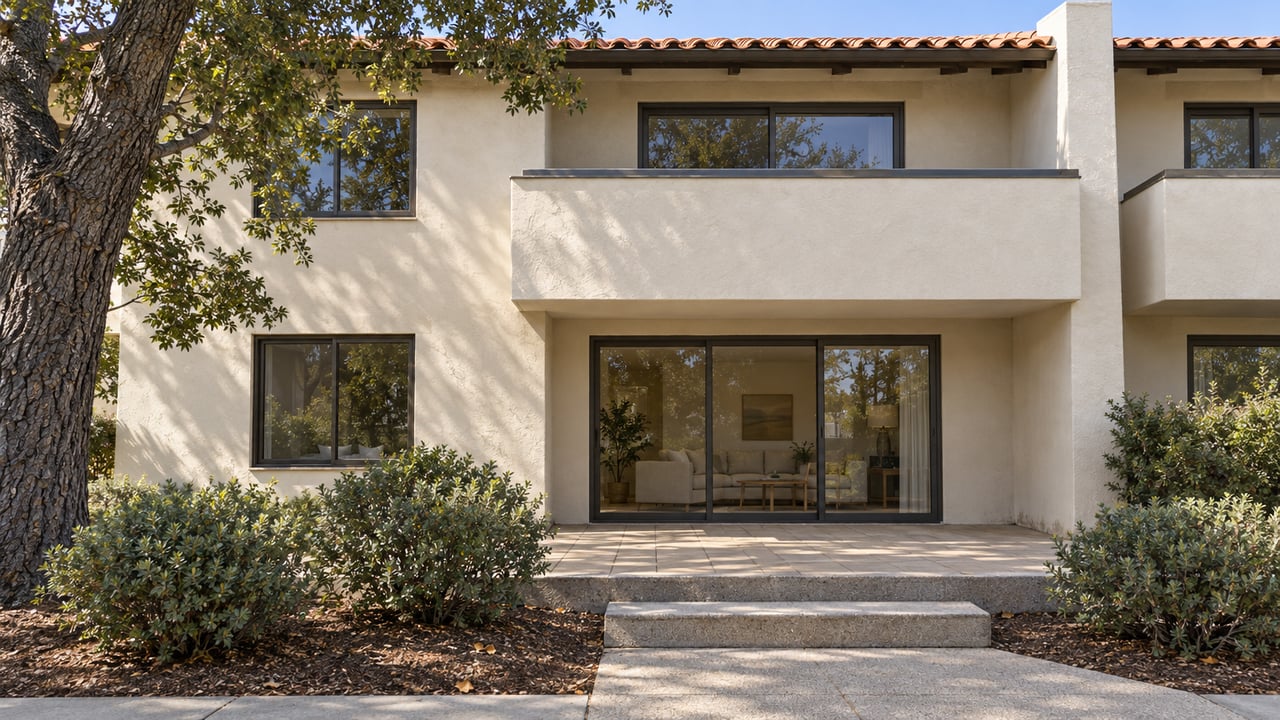
Two Walnut Creek condos list at the same price, with the same square footage and the same updated kitchen. One closes on a standard 30-year loan. The other sends its buyer to a lender who wants more cash down and a higher rate.
The difference usually has nothing to do with the unit. It comes down to the homeowners association's master insurance policy, its reserve fund and its budget, which are documents most buyers never open until escrow. As of this fall, those documents matter more than they used to. For conforming loan applications dated on or after August 3, 2026, Fannie Mae dropped its abbreviated "Limited Review" for established condo projects, and Freddie Mac dropped its matching "Streamlined Review" on the same date. Under Fannie's rules, a lender now has to run a Full Review of the project or use a Waiver of Project Review where one applies. Freddie's bulletin sets the same August 3 date. In practice, the building goes through underwriting alongside the buyer.
The September numbers show a market that slowed without getting cheaper
Bay East's Walnut Creek condominiums and townhomes report for September 2026 shows a $670,000 median sale price, up 7.2% from September 2025. Buyers paid 100% of list price on average. If you stop there, sellers look like they're in control.
Here are the last six months from the same report.
| Month (2026) | Units sold | Median sale price | Average days on market |
|---|---|---|---|
| April | 62 | $627,000 | 27 |
| May | 52 | $692,500 | 29 |
| June | 75 | $670,000 | 33 |
| July | 74 | $649,500 | 42 |
| August | 76 | $587,000 | 42 |
| September | 59 | $670,000 | 47 |
In September 2026, 59 attached homes sold, compared with 71 in September 2025, and average days on market rose from 38 to 47, an increase of 23.68%. Inventory barely changed, with 183 active listings at the end of September versus 193 a year earlier. Prices are holding while each sale takes longer.
Be careful about reading cause into that table. Days on market started rising in June and July, before the August 3 change, so the new rules can be part of the slowdown at most. Season, rates and plenty of other things fit inside a 47-day average. The report also counts Walnut Creek and Rossmoor together, so it's a combined series, not a city-only number. What the table can show is that a slower condo sale is now normal in Walnut Creek. The financing rules explain why some of those sales take longer than others.
What changed on August 3
Limited Review used to let many condo loans skip a close look at the association. According to CAI, the community association industry group, Limited Review accounted for roughly 40% of all project reviews. Retiring it moves those transactions into the fuller process, which brings "substantially more documentation and formal lender questionnaires for nearly all condominium sales." CAI also warned that the change could slow transactions.
CNBC reported in August that a fuller project review can lengthen approvals or disqualify a project entirely. The same report noted that once a building passes, the approval generally doesn't have to be repeated for each later loan. A complex that has recently cleared review is an easier purchase than one that hasn't, even when the two units look the same in photos.
Small buildings get some relief. Fannie Mae expanded the Waiver of Project Review to projects with ten or fewer units. A project with five to ten units qualifies only if it isn't part of a master association or larger development.
What happened when Rossmoor's master policy fell short
Walnut Creek already knows what this looks like. In March 2025, the Mercury News reported that 35 Walnut Creek condominium projects were on Fannie Mae's list of ineligible projects. Rossmoor was the only one the paper named. Rossmoor's master policy carried $1 million per unit but insured only enough to cover about 44% of its dwellings. Waterford and Heritage Oaks, which have their own separate policies, stayed eligible for conventional loans. So two parts of the same community had different financing outcomes because they carried different insurance policies.
The Mercury News described the effects. Rossmoor sales temporarily lost conventional lending, some sellers turned to cash buyers, and values dipped for a while. An alternative lender later stepped in with loans that carried higher rates and larger down payment requirements. An agent quoted in the same coverage estimated that owners would pay about $300 more a month on average to meet Fannie Mae's insurance requirements.
Rossmoor News reported on May 27, 2025 that Fannie Mae and Freddie Mac still weren't guaranteeing loans on Rossmoor homes because the coverage bought amounted to only about half of what was needed. Its February 10, 2026 update said premiums were falling for a second straight year, but the community was "still no closer to 'full replacement' coverage." A June 23, 2026 report described premium savings for residents. Lower premiums are good news for monthly costs. Lenders, though, are looking at whether coverage is complete. Anyone buying there should ask a lender for the project's current status before making an offer.
The rules that come next
August 3 was one of several dates. Fannie Mae's March 18, 2026 lender letter, with Freddie Mac moving in parallel, set up a schedule that runs into next year:
| Effective for applications | What changes for the HOA |
|---|---|
| Immediately, from March 18, 2026 | Master policy must cover at least 100% of estimated replacement cost |
| On or after July 1, 2026 | Per-unit master-policy deductible capped at $50,000 |
| On or after August 3, 2026 | Limited Review retired; reserve studies can no longer use the "baseline funding" method |
| On or after January 4, 2027 | Minimum reserve allocation rises from 10% to 15% of budgeted income in Full Reviews |
Baseline funding is the approach that lets a reserve balance approach zero without going below it. Fannie Mae gives its reasoning in the letter. Projects with underfunded reserves have tended to be the ones needing critical repairs, and their owners "can experience substantial financial hardship from unexpected special assessments or higher regular assessments or dues."
The January deadline is the one to watch if you're buying this winter. HousingWire quoted a loan originator who expects associations with weaker reserves to face a choice: raise dues or lose conventional eligibility. Some buyers could end up with non-QM loans. A Walnut Creek HOA that budgets 12% for reserves met the standard in September. On January 4 it won't, unless the board changes the budget.
What a building that doesn't qualify costs you
A project that fails review can still be financed, but on different terms. According to CNBC, some lenders will keep those loans in their own portfolio, which can mean a larger down payment or a higher rate. That's a real obstacle for first-time buyers with limited cash. It also affects resale. If your building falls out of eligibility after you buy, your future buyers face the same narrower set of lenders. Rossmoor sellers saw exactly that when some turned to cash buyers.
So the price gap between two similar Walnut Creek units can reflect more than finishes or the view. It can also reflect which loans are available on each building.
The documents to request before you write an offer
Delays on the HOA questionnaire can threaten a closing date, so get the association's paperwork early. These are the items worth asking for up front:
- The current budget, so your lender can check the reserve allocation against today's 10% minimum and January's 15%.
- The most recent reserve study, including which funding method it uses.
- The master insurance policy, with the coverage amount relative to replacement cost and the per-unit deductible.
- Any current or planned special assessments, plus recent board minutes on dues.
- The exterior elevated element inspection report. SB 410, approved October 10, 2025, added the most recent balcony and elevated-element inspection report to the documents a condo seller must give a prospective buyer. Under the statute, the first of those inspections was due January 1, 2025, and they repeat every nine years.
Give your lender the address before you fall for the unit. They can tell you how the project stands faster than the seller's side can.
Quick reality check: this is general information, not legal, tax or financial advice. Lender rules and HOA documents differ, so confirm your own situation with your lender and, where needed, an attorney.
A few quick answers
Does every condo loan now need a full review? For Fannie Mae and Freddie Mac loans, the abbreviated review is gone for applications dated on or after August 3, 2026. Lenders now use a full review or a waiver where the project qualifies. Once a building is approved, the review generally doesn't have to be repeated for each new loan.
Are small buildings treated differently? Projects with ten or fewer units can qualify for a waiver. Five- to ten-unit projects must also sit outside any master association or larger development.
Is the $670,000 median a Walnut Creek-only figure? No. Bay East's September 2026 series combines Walnut Creek and Rossmoor.
If there's a Walnut Creek condo or townhome on your list, send me the address before you send an offer. I'll get the HOA's budget, insurance and reserve documents in front of you and your lender early, so the building's paperwork doesn't surprise you in escrow. Lauren Deal. Let's Connect.
